
Lion’s Mane Mushroom: Research, Compounds, and Culinary Uses

Quick Answer
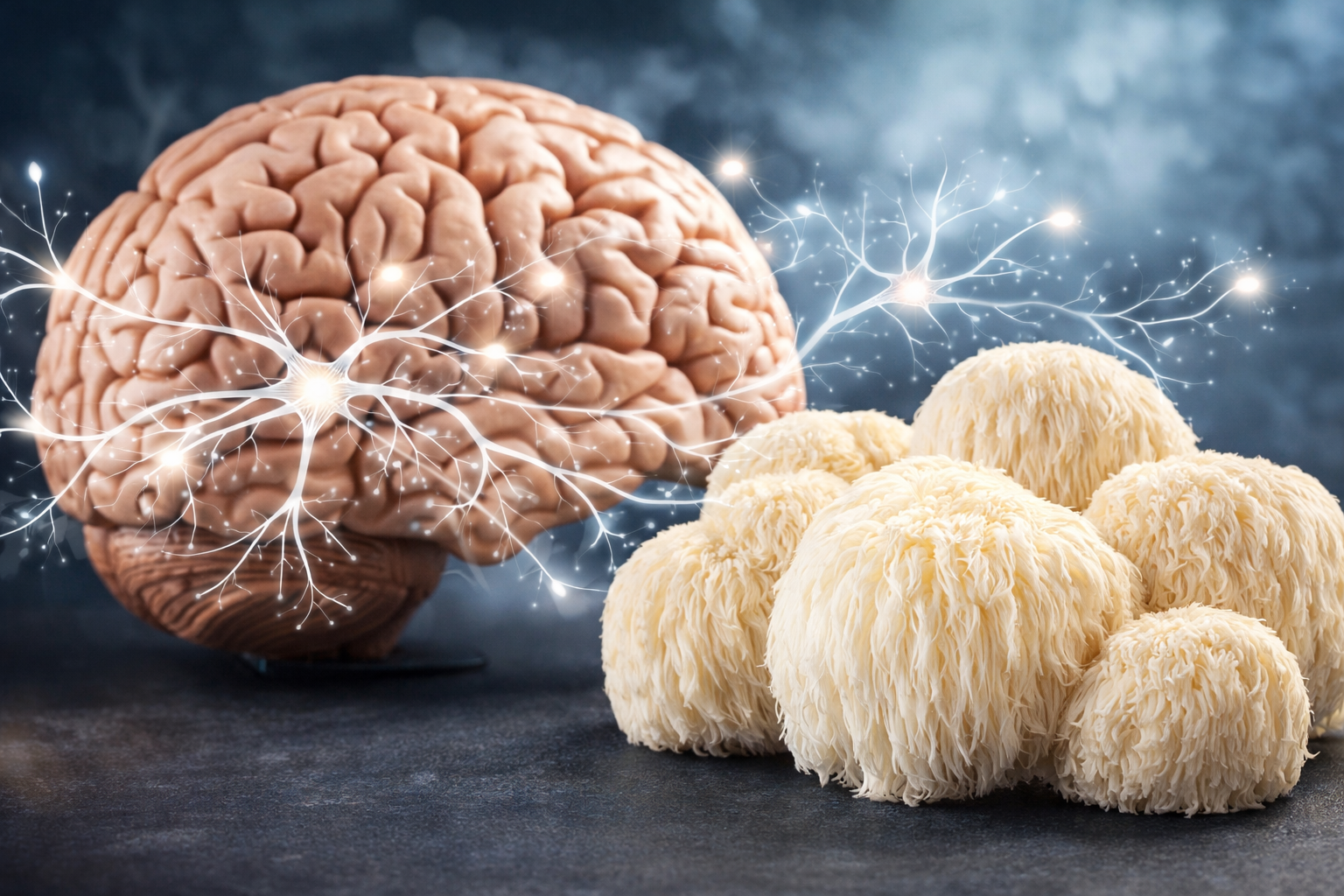
Lion’s Mane (Hericium erinaceus) is an edible mushroom recognized by its distinctive cascading white spines.
It is used fresh or dried in cooking and is also available as powders and extracts. Researchers have studied naturally occurring compounds found in both the fruiting body and mycelium, particularly in laboratory, animal, and a smaller number of human studies.
Research interest should not be confused with established health effects. Different studies use different preparations, amounts, extracts, and mushroom materials, making direct comparisons difficult.
What Is Lion’s Mane Mushroom?
Lion’s Mane, scientifically known as Hericium erinaceus, is an edible fungus found naturally in parts of North America, Europe, and Asia.
Unlike mushrooms with a traditional cap and stem, Lion’s Mane develops clusters of long, soft-looking spines.
When fresh, it has a tender texture and mild flavour that is sometimes compared with seafood. It can be cooked like other edible mushrooms or dried for later preparation.
For more information about mushroom cultivation, see How Medicinal Mushrooms Are Grown.
Fruiting Body and Mycelium Are Different
The fruiting body is the visible mushroom that develops during reproduction.
Mycelium is the network of fungal tissue from which the mushroom grows.
Both parts have been studied, but they do not necessarily contain the same compounds in the same quantities.
This distinction becomes particularly important when comparing scientific studies and commercial mushroom products.
For a complete explanation, see Fruiting Body vs Mycelium: What’s the Difference?
Naturally Occurring Compounds in Lion’s Mane
Researchers have identified a variety of naturally occurring substances in Hericium erinaceus, including:
- beta-glucans
- other polysaccharides
- sterols
- phenolic compounds
- hericenones
- erinacines
Research reviews report that hericenones have been identified primarily from fruiting bodies, while erinacines are particularly associated with mycelium.
The presence of these compounds does not by itself prove that eating Lion’s Mane will produce a particular medical or physiological effect.
Why Are Hericenones and Erinacines Studied?
Hericenones and erinacines have attracted scientific attention because laboratory and animal research has examined how some of these compounds interact with biological pathways, including pathways involving nerve growth factor.
Much of this work remains preclinical.
Results involving isolated compounds, concentrated extracts, cultured mycelium, or animals should not automatically be applied to ordinary servings of whole Lion’s Mane fruiting bodies.
That distinction is especially important when reading headlines about mushroom research.
What Does Human Research Show?
A small number of human studies have investigated Lion’s Mane preparations in areas such as cognition, mood, and cognitive decline.
Some studies have reported interesting findings, but the human evidence remains limited. Trials have often involved relatively small groups and have used different Lion’s Mane preparations.
A recent systematic review included only a small number of randomized and pilot clinical trials alongside substantially more laboratory research.
This means current research is interesting, but it does not justify treating whole dried Lion’s Mane as a proven treatment for memory loss, dementia, depression, neurological disease, or another medical condition.
Laboratory Research and Human Evidence Are Not the Same
Laboratory research allows scientists to investigate specific mushroom compounds under controlled conditions.
Animal studies provide another level of information.
Human clinical trials provide more directly relevant evidence, but they must still be evaluated for:
- number of participants
- study duration
- mushroom preparation
- amount used
- placebo controls
- participant characteristics
- outcome being measured
A promising laboratory finding does not automatically establish a benefit in humans.
Whole Lion’s Mane and Concentrated Extracts Are Different
Whole dried Lion’s Mane contains the mushroom material in substantially the form in which it was harvested and dried.
Extracts undergo additional processing.
Depending on the method, an extract may concentrate certain components while reducing or removing others.
Because of this, a study involving a standardized extract cannot automatically be used to describe an ordinary whole dried mushroom.
For more information about extraction, see Mushroom Extracts Explained: Water Extract vs Alcohol Extract vs Dual Extract.
Lion’s Mane as a Culinary Mushroom
Lion’s Mane is an edible mushroom and can be prepared in many of the same ways as other culinary fungi.
Fresh Lion’s Mane can be:
- sliced and sautéed
- roasted
- added to soups
- added to stir-fries
- incorporated into savoury dishes
Dried Lion’s Mane can be:
- simmered in water
- used in soups or broths
- ground into mushroom powder
- rehydrated for cooking
For preparation ideas, see How to Prepare Dried Medicinal Mushrooms: Tea, Powder, Cooking & Tinctures.
What About Lion’s Mane Tea?
Dried Lion’s Mane can be simmered in hot water to make a mushroom beverage.
This is a culinary preparation.
Tea preparation should not be confused with a standardized extract used in a research study, because the concentration and chemical composition may differ substantially.
What Does “Extract” Mean?
Extraction uses a liquid such as water, alcohol, or a combination of solvents to separate certain components from mushroom material.
Terms such as:
- water extract
- alcohol extract
- dual extract
- 8:1 extract
- 10:1 extract
describe aspects of processing.
They do not automatically prove potency, effectiveness, or medical benefit.
Does More Concentrated Mean Better?
Not necessarily.
A larger extraction ratio does not by itself tell you:
- the amount of a particular compound
- starting mushroom quality
- extraction efficiency
- laboratory purity
- biological effect
A product should be evaluated using the complete information available rather than one number on its label.
Understanding Beta-Glucans
Beta-glucans are naturally occurring polysaccharides found in the cell walls of many fungi.
Lion’s Mane contains beta-glucans, as do numerous other mushroom species.
The amount and structure can vary with species, mushroom material, cultivation, processing, and testing method.
Simply stating that a mushroom contains beta-glucans should not be interpreted as proof of a specific health effect.
Choosing Whole Dried Lion’s Mane
When buying dried Lion’s Mane as a food ingredient, useful information includes:
- species identified as Hericium erinaceus
- mushroom material clearly identified
- complete ingredient list
- country of production
- proper drying
- clean packaging
- storage instructions
- batch information when available
A transparent label makes it easier to understand exactly what you are purchasing.
If you would like to see our Canadian-grown mushroom, visit Dried Lion’s Mane Mushrooms.
How Should Dried Lion’s Mane Be Stored?
Dried mushrooms should be protected from moisture, excessive heat, and direct sunlight.
Keep the package closed when not in use and avoid introducing moisture with wet utensils.
Do not use mushrooms showing visible mould, unexpected moisture, unusual deterioration, or signs of spoilage.
Lion’s Mane Research Is Still Developing
Scientific interest in Hericium erinaceus has increased substantially.
Researchers continue to investigate its chemistry, food applications, fruiting-body compounds, mycelial compounds, and various biological mechanisms.
Recent reviews still emphasize that much of the evidence comes from laboratory and animal research rather than large, well-controlled human trials.
That makes Lion’s Mane an interesting subject of scientific study without requiring us to market the mushroom as a medical treatment.
Frequently Asked Questions
Is Lion’s Mane an edible mushroom?
Yes. Hericium erinaceus is an edible mushroom that can be prepared as food.
Does Lion’s Mane contain hericenones?
Hericenones have been identified in Lion’s Mane fruiting bodies and remain an active area of chemical research.
Does Lion’s Mane contain erinacines?
Erinacines are particularly associated with Lion’s Mane mycelium. This is one reason it is important to know whether a study or product uses fruiting body, mycelium, or both.
Does research prove Lion’s Mane improves memory?
Current research is not strong enough to make such a general conclusion. Some small human studies have produced interesting results, but preparations and study populations differ and substantially more research is needed.
Is dried Lion’s Mane the same as Lion’s Mane extract?
No. Whole dried mushroom and processed extracts are different preparations.
Can Lion’s Mane be cooked?
Yes. Lion’s Mane is an edible culinary mushroom and can be prepared in soups, broths, sautés and other recipes.
Final Thoughts
Lion’s Mane is an unusual edible mushroom with distinctive physical characteristics and an interesting chemical composition.
Its fruiting body and mycelium contain compounds that continue to be investigated in laboratory, animal, and human research.
The most accurate approach is to separate what researchers are studying from what has actually been established in people.
For whole dried Lion’s Mane sold as food, the emphasis should remain on species identification, cultivation, quality, preparation, flavour, storage, and culinary use rather than promising particular medical or physiological effects.