
Turkey Tail Mushroom Safety: Myths, Facts, and Who Should Be Careful

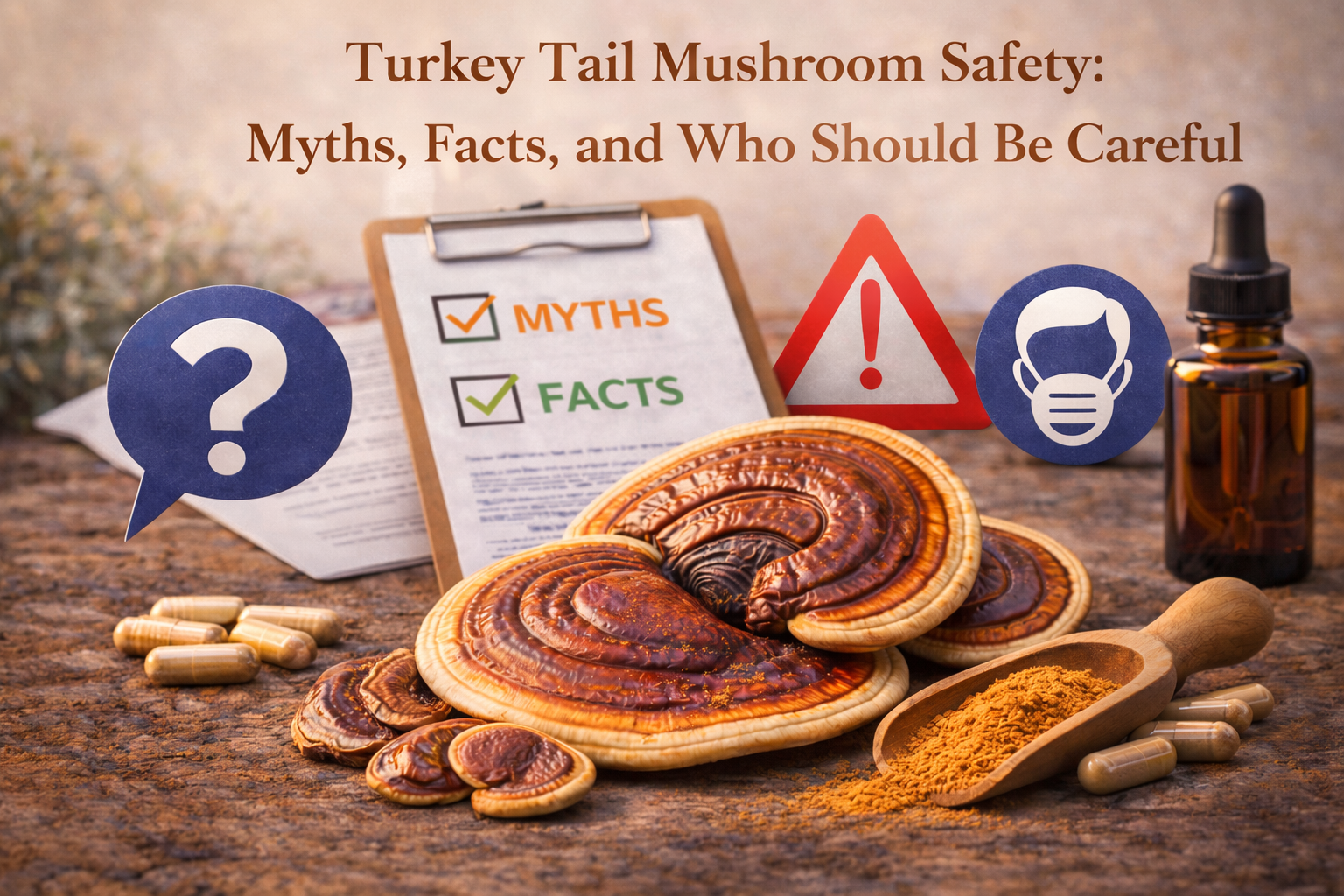
Turkey tail mushroom safety is a common concern among people exploring functional mushrooms for immune support. While Turkey Tail has a long history of traditional use, modern interest has raised questions about side effects, precautions, and product quality.
This guide explores common myths, what research suggests about Turkey Tail safety, and who should use caution when incorporating it into a wellness routine. For a broader overview, see our guide to the health benefits of turkey tail mushroom.
Is Turkey Tail Mushroom Safe?
Turkey Tail mushroom is generally considered well tolerated when sourced properly and used as part of a balanced wellness routine. Many individuals include it in daily habits without reporting adverse effects.
https://www.cordyceps-canada.ca/turkey-tail-for-immune-support/Turkey Tail is often included in routines focused on long-term wellness, particularly those centered around turkey tail for immune support.
As with most functional mushrooms, starting gradually and maintaining consistent use is a common approach.
Product quality and proper identification play an important role in safety.
Common Myths About Turkey Tail
Myth 1: Turkey Tail Is Only for Specific Health Conditions
Turkey Tail is often discussed in relation to immune support, but it is also commonly included in general wellness routines focused on balance and long-term consistency.
Myth 2: Turkey Tail Works Immediately
Turkey Tail is not typically associated with immediate effects. It is most often included in long-term routines rather than short-term use.
Myth 3: All Turkey Tail Products Are the Same
Quality varies depending on:
- Species identification
- Cultivation methods
- Processing techniques
- Extraction methods
Transparency is a strong indicator of product quality.
Possible Side Effects
Most users tolerate Turkey Tail well, but some individuals may experience mild reactions, especially when first introducing it.
Possible effects may include:
- Digestive discomfort
- Mild nausea
- Temporary changes in digestion
These reactions are uncommon and often resolve with adjustments.
Some individuals exploring digestive balance may also look into turkey tail and gut health as part of broader wellness routines.
Who Should Use Caution?
Certain individuals should approach Turkey Tail more carefully.
This may include:
- People with mushroom allergies
- Individuals taking medications affecting immune function
- Those with specific medical conditions
- Pregnant or breastfeeding individuals
Consulting a qualified professional is recommended when introducing new supplements in these situations.
Quality and Safety
Choosing high-quality Turkey Tail products reduces unnecessary risk.
Look for:
- Clearly labeled species (Trametes versicolor)
- Fruiting body ingredients
- Transparent sourcing and processing
- Clean, properly dried material
Proper preparation also plays an important role, and understanding how to use turkey tail mushroom can help ensure consistent and appropriate use.
Proper identification helps ensure you are using the correct mushroom species.
Safety Across Mushroom Species
Many safety considerations apply across functional mushrooms. You can review broader cordyceps mushroom safety guidance to understand precautions that may apply to multiple species.
Final Takeaway
Turkey Tail mushroom safety is generally well established when products are sourced properly and used responsibly. Most concerns arise from misinformation, low-quality products, or unrealistic expectations.
Choosing reputable sources and maintaining consistent routines supports a safe and balanced approach to Turkey Tail use.
Understanding turkey tail mushroom safety helps support informed and responsible use.