
Turkey Tail Mushroom and Gut Health: What Research Suggests

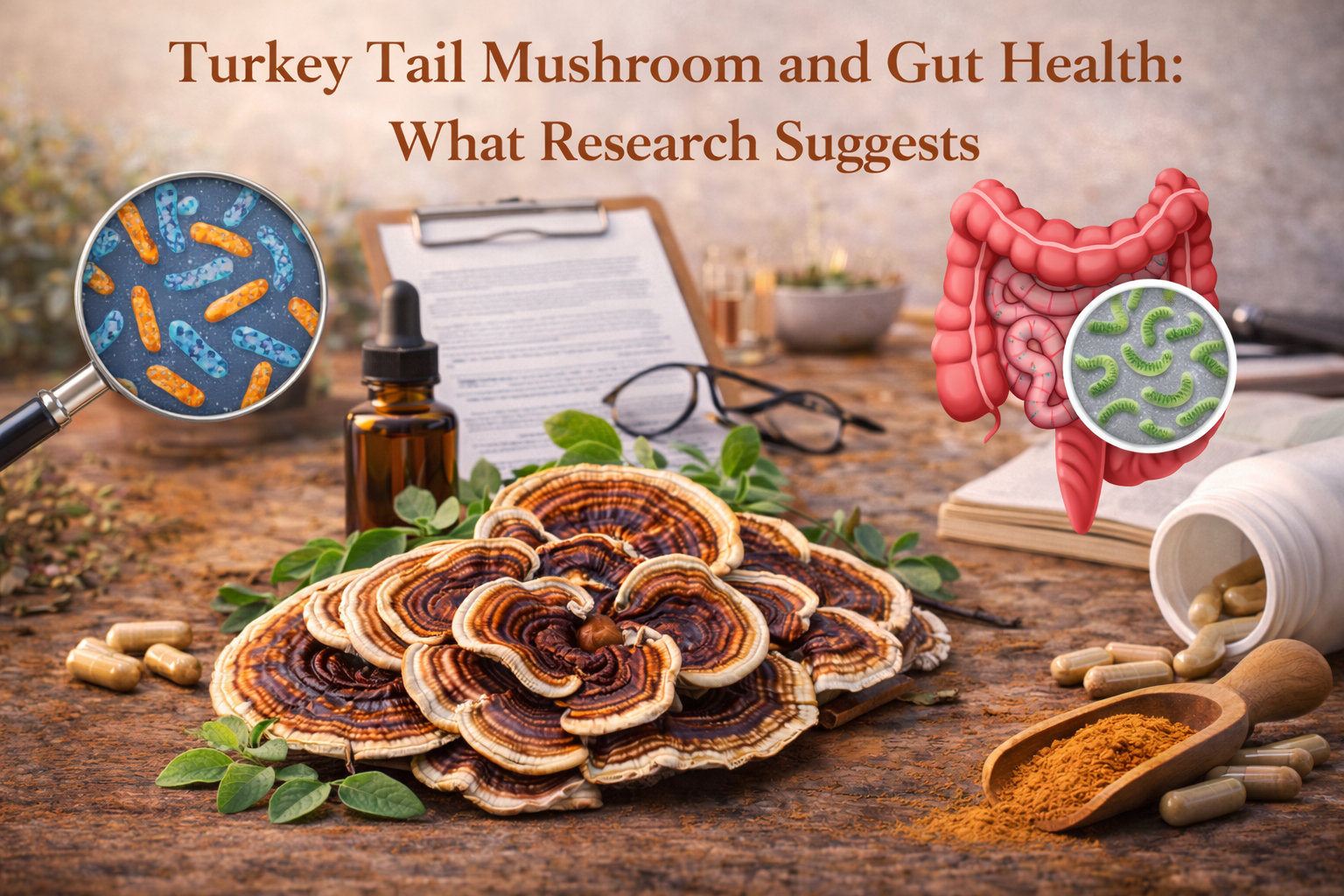
Turkey tail and gut health are increasingly discussed together as research explores the microbiome and overall wellness. Known scientifically as Trametes versicolor, Turkey Tail has attracted attention for its relationship to gut bacteria and digestive balance.
This article explores what research suggests about Turkey Tail and gut health, how it is commonly used in wellness routines, and what realistic expectations look like. For a broader overview, see our guide to the health benefits of turkey tail mushroom.
Why Gut Health Matters
The gut microbiome plays a central role in overall wellness. It is closely connected to:
- Immune system function
- Nutrient absorption
- Digestive balance
- Systemic health
Because of this connection, many wellness routines now focus on supporting a balanced microbiome.
Turkey Tail and the Microbiome
Research has explored how compounds found in Turkey Tail may interact with beneficial gut bacteria.
Key compounds include:
- Beta-glucans
- Polysaccharides such as PSK and PSP
These compounds are studied for their relationship to microbial balance and immune-related pathways.
Rather than acting directly on digestion, Turkey Tail is often discussed in relation to supporting the environment in which beneficial bacteria thrive.
What Research Suggests
Some studies have examined how Turkey Tail compounds may influence gut microbiota composition. While findings vary depending on study design and population, interest continues to grow in how functional mushrooms interact with the microbiome.
It is important to understand that gut health is influenced by many factors, including diet, hydration, stress levels, and lifestyle habits.
Turkey Tail and Immune Support Connection
The gut and immune system are closely linked. Because a significant portion of immune activity is associated with the gut, Turkey Tail is often included in routines that support both areas.
For a deeper look at immune-focused use, see our article on turkey tail for immune support.
How People Use Turkey Tail for Gut Health
Common approaches include:
- Daily use in small amounts
- Long-term consistency
- Pairing with balanced diets
- Combining with other functional mushrooms
Turkey Tail is often used alongside Reishi or Cordyceps in broader wellness routines.
To understand how energy-support mushrooms differ, explore the health benefits of cordyceps mushrooms.
Safety Considerations
Turkey Tail is generally well tolerated when sourced properly. As with any supplement, individuals with medical conditions or those taking medications should consult a qualified professional before use.
Understanding turkey tail and gut health helps support informed and consistent wellness routines.
For broader precautions that apply across functional mushroom species, review general cordyceps mushroom safety guidance.
Final Takeaway
Turkey Tail mushroom and gut health are closely connected in modern wellness discussions due to growing research interest in the microbiome. While it is not a quick solution, Turkey Tail is commonly included in structured, long-term routines focused on balance and consistency.
When used regularly and sourced carefully, Turkey Tail may support broader wellness practices aimed at at long-term balance.