
Reishi Mushroom for Stress and Relaxation: What Research Suggests

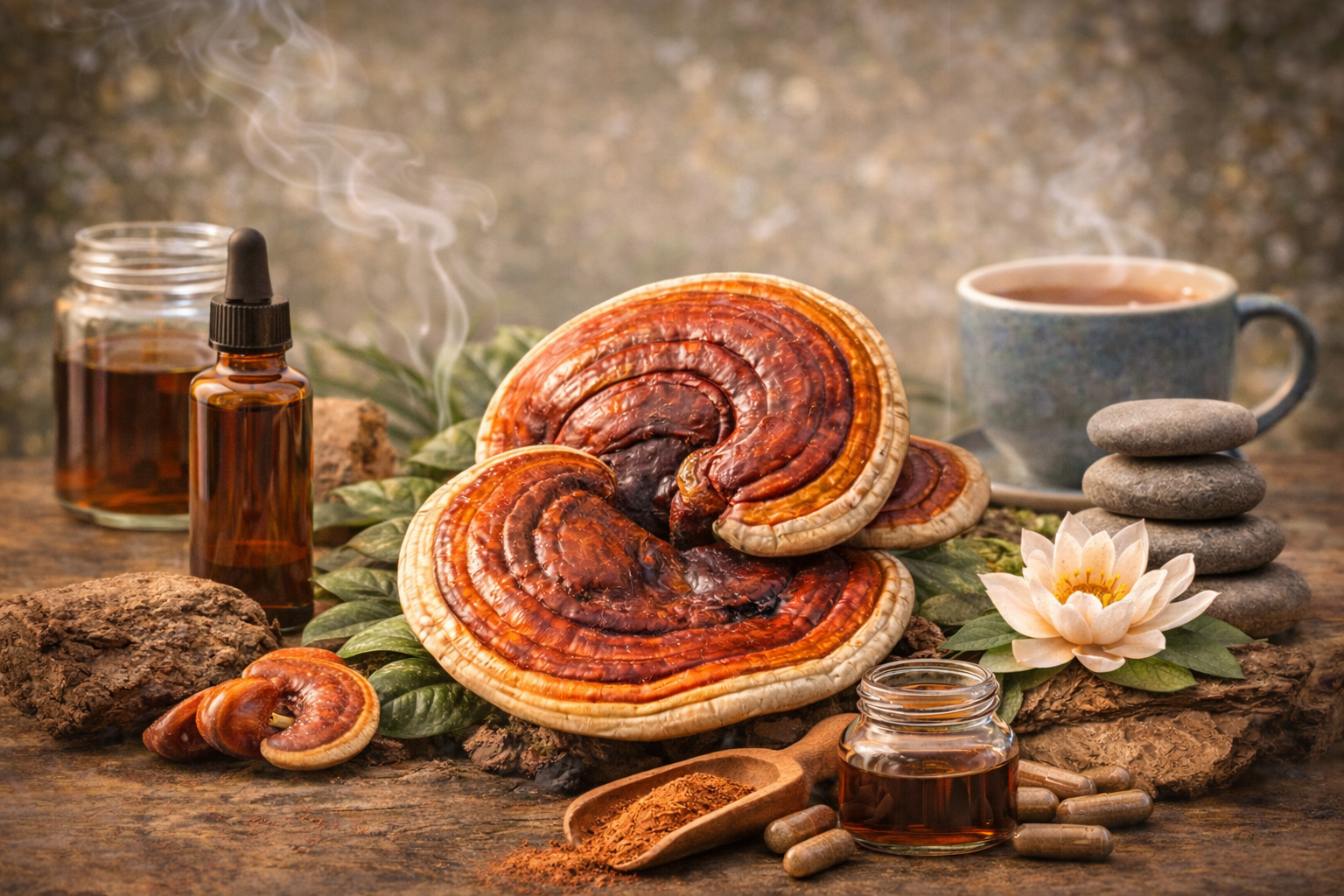
Reishi for stress and relaxation is one of the most common reasons people explore this traditional functional mushroom.Known scientifically as Ganoderma lucidum, Reishi has been used in traditional wellness systems for centuries and is frequently associated with calmness and long-term resilience.
This article explores how Reishi is used in modern wellness routines, what research suggests about its relationship to stress pathways, and how people incorporate it into daily habits. For a broader overview, see our guide to the health benefits of reishi mushroom.
Why Reishi Is Associated With Stress Support
Reishi is often categorized as an adaptogenic mushroom. Adaptogens are substances studied for their relationship to the body’s stress response systems.
Rather than acting as a stimulant or sedative, Reishi is typically described as supporting balance within normal stress regulation pathways.
This is one reason many people include Reishi in routines focused on:
- Long-term resilience
- Daily stress management
- Evening wind-down routines
- General wellness maintenance
Reishi and Relaxation Routines
Many people choose Reishi because it is often associated with calm, grounding effects rather than energy stimulation.
Common ways Reishi is used include:
- Evening tea routines
- Nighttime supplement schedules
- Wind-down rituals before sleep
- Relaxation-focused wellness programs
Because of this calming reputation, Reishi is often taken later in the day.
Reishi Compared to Other Functional Mushrooms
Different mushrooms are often used for different wellness goals.
For example:
- Lion’s Mane is frequently associated with focus and cognitive clarity
- Cordyceps is commonly linked to energy and stamina
- Reishi is typically included in relaxation and stress-support routines
To explore energy-focused mushrooms, see our guide to the health benefits of cordyceps mushrooms.
What Research Suggests
Research on Reishi has examined its relationship to stress response systems, immune pathways, and overall wellness markers. While results vary depending on study design and dosage, Reishi continues to attract scientific interest.
It is important to approach these findings realistically. Lifestyle factors such as sleep, nutrition, and stress management habits remain central to overall wellbeing.
Who Might Consider Reishi for Stress Support?
Reishi is commonly included in routines by individuals who:
- Experience ongoing daily stress
- Want to support evening relaxation
- Prefer non-stimulant wellness approaches
- Use structured nighttime routines
Consistency is often more important than exact timing.
Safety Considerations
Reishi is generally well tolerated when sourced properly. As with any supplement, individuals with medical conditions or those taking medications should consult a qualified professional before introducing new products.
For broader precautions across functional mushroom species, review general cordyceps mushroom safety guidance.
Final Takeaway
Reishi mushroom for stress and relaxation remains one of the most widely discussed uses of this traditional mushroom. While it is not a sedative or quick-acting stress remedy, it is commonly included in long-term wellness routines designed to support calmness and resilience.
When sourced carefully and used consistently, Reishi can become part of a balanced approach to stress management.
Understanding how reishi for stress is discussed in research helps set realistic expectations.