
Health Benefits of Reishi Mushroom: A Comprehensive Guide

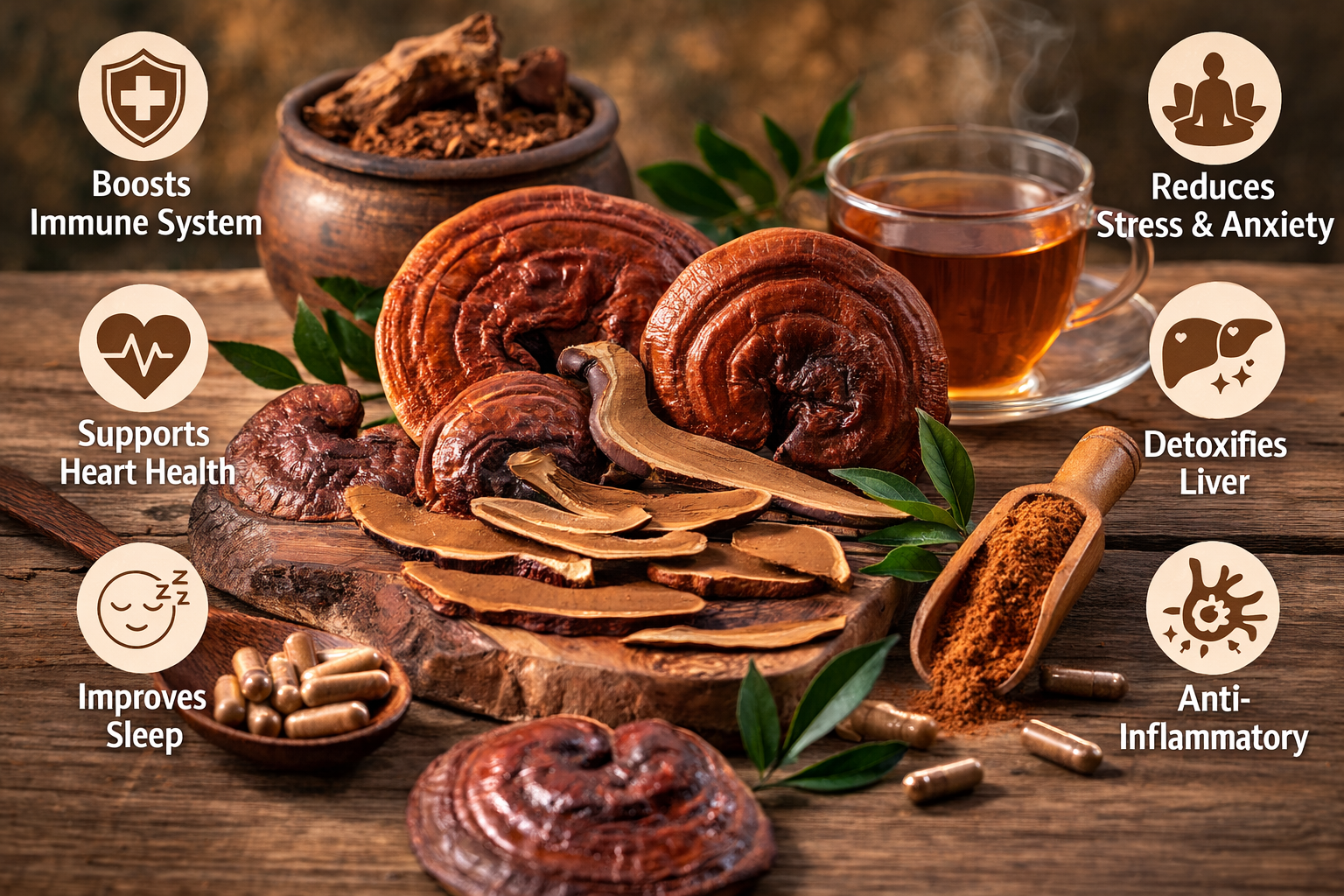
The health benefits of reishi mushroom have attracted long-standing interest for stress support and immune balance.
This comprehensive guide explores what Reishi mushroom is, what research suggests about its wellness applications, how it is commonly used, and how to evaluate product quality.
What Is Reishi Mushroom?
Reishi is a wood-growing mushroom known for its glossy, reddish-brown cap and firm texture. Unlike culinary mushrooms, Reishi is extremely bitter and is typically consumed as a tea, decoction, extract, or powder.
Key compounds studied in Reishi include:
- Triterpenes
- Beta-glucans
- Polysaccharides
- Ganoderic acids
These compounds are the primary reason Reishi is associated with stress response and immune balance.
Reishi and Stress Support
Reishi is most commonly discussed in relation to stress management and relaxation support. It is frequently categorized as an adaptogenic mushroom, meaning it may support the body’s response to stress.
Wellness users often include Reishi in routines designed to support:
- Evening wind-down
- Long-term stress balance
- General resilience
Reishi is typically described as calming rather than energizing.
Reishi and Sleep Routines
Because of its calming association, Reishi is often used in evening wellness programs. While it is not a sedative, some individuals include it in routines aimed at supporting relaxation before sleep.
Reishi is commonly paired with:
- Nighttime teas
- Wind-down rituals
- Digital detox routines
Consistency tends to matter more than immediate effect.
Reishi and Immune Balance
Like many functional mushrooms, Reishi contains beta-glucans that are studied for their relationship to immune modulation.
Rather than simply stimulating immune activity, Reishi is often described as supporting balance within normal immune function.
For species more commonly associated with immune-specific research, you may explore the health benefits of turkey tail mushroom.
How Reishi Is Commonly Used
Reishi is typically prepared as:
- Long-simmered decoctions
- Dual extracts
- Powdered whole mushroom
- Capsules
Because of its woody structure, simmering is one of the most traditional preparation methods.
Reishi is often combined with other mushrooms in broader wellness stacks. For example, some routines include calming species in the evening and energy-support species earlier in the day. To understand how energizing species compare, see the health benefits of cordyceps mushrooms.
Safety Considerations
Reishi is generally considered well tolerated when sourced properly and used in appropriate amounts. As with any supplement, individuals with medical conditions or those taking medications should consult a qualified professional before use.
Many safety considerations apply across mushroom species, so reviewing broader cordyceps mushroom safety guidance can support responsible use.
Choosing High-Quality Reishi
Because Reishi is naturally tough and woody, processing quality matters.
Look for:
- Clearly identified species (Ganoderma lucidum or related species)
- Fruiting body ingredients
- Transparent cultivation practices
- Proper drying and extraction methods
Avoid products with vague labeling or undisclosed blends.
Final Takeaway
The health benefits of Reishi mushroom are most closely associated with stress support, immune balance, and long-term wellness routines. Its long history of traditional use and continued research interest have made it one of the most respected functional mushrooms worldwide.
When sourced carefully and used consistently, Reishi can be part of a balanced and structured wellness program.